Reach and release
Lift both arms slowly overhead, then let them fall. A simple way to mark a change of task.
Each guide below is general educational content. We describe a structure, then offer ways to shorten or soften it. Nothing here treats a condition or promises an outcome — it is simply a calm starting point you can adapt.
These routines are intended for general wellbeing and learning. They are not a diagnosis or treatment. If something feels uncomfortable, pause, and speak with a qualified professional about your individual circumstances.
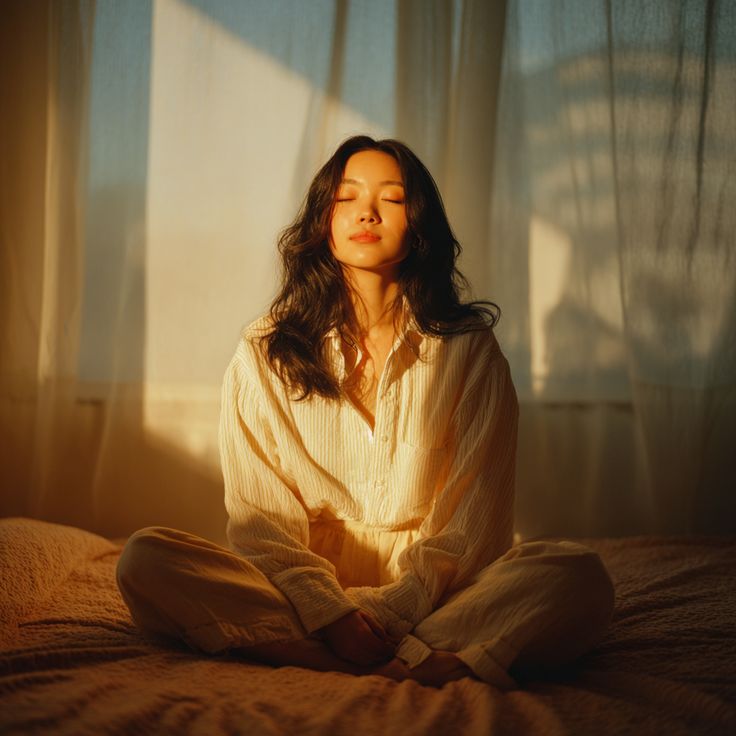
Slow breathing is one of the simplest things to practise in a crowded day because it needs no equipment and no privacy. The idea is not to breathe “correctly”, but to give your attention a steady, repeatable shape to rest on.
Let your shoulders drop and unclench your jaw. Notice where you are sitting or standing.
Breathe in for a slow count of four, then out for a slow count of six. Keep it comfortable.
Continue for six to eight rounds, or until the next thing on your list genuinely needs you.
A short sequence of unhurried movements can interrupt a long stretch of stillness. Treat the ideas below as options, not rules.
Lift both arms slowly overhead, then let them fall. A simple way to mark a change of task.
A short, unhurried walk — even across a room — to shift your attention and your posture.
Look at something further away for a moment to give close-up focus a brief rest.
Writing a single honest sentence can be a surprisingly effective way to close a busy chapter of the day. These prompts are open-ended on purpose.
There is no right answer and nothing to score. If a prompt does not resonate, skip it. The value is in the brief pause itself, not in producing a perfect note.
Reflective writing is a general wellbeing habit, not a clinical tool.
Turn towards a window for a routine when you can. Natural light often makes a pause feel more distinct from work.
Mute one source of sound for a few minutes. Even partial quiet can make a short reset feel longer.
A plant, a cup, a stone — a small, neutral object to rest your eyes on while you breathe.
Place your phone face down for the length of the routine so notifications wait their turn.
Settle and take three slow breaths.
Reach and release, then a soft gaze out a window.
Write one sentence, then return to your day.
Individual routines are easier to keep when they sit inside a loose weekly rhythm. Our Balance page explains a flexible way to plan rest without over-scheduling it.
Visit the Balance pageIt is tempting to adopt everything at once. In practice, a single routine that you actually repeat tends to be more useful than a long list you admire but never open.
Pick one guide from this page, give it a fair try across a few days, and only then decide whether to layer in a second.